Does your Child have Hearing Loss?
Hearing loss in infants and children is relatively common and occurs in approximately
3 of every 1,000 babies.
There is clinical research being planned that aims to advance the understanding of,
and investigational therapies for, hearing loss in children.

Why Participate in a clinical research study?
Clinical research studies give researchers the opportunity to better understand and diagnose different conditions, like childhood deafness and hearing loss, and advance new potential treatments for them.
Researchers can compare the effects of various medical treatments, drugs, and interventions.
With the combined efforts of researchers and clinical study participants, researchers hope to find better interventions and treatment options for future generations.
Sign up to be notified of a clinical research study, or to be contacted in the future as new studies become available.
-
1If you are the parent or legal guardian of a child with suspected or diagnosed hearing loss, your child may qualify for a clinical study.
-
2Study-related assessments and/or procedures, if required, are provided at no cost. You do not need health insurance to participate.
-
3Volunteers who take part in the study may be eligible to receive compensation for their time and travel.
-
4Participants will receive study-related assessments and/or procedures, if any are required, from a team of medical professionals. The study may require regular visits to a research center.

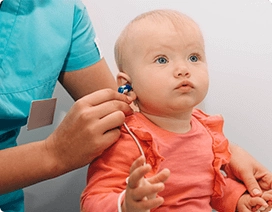
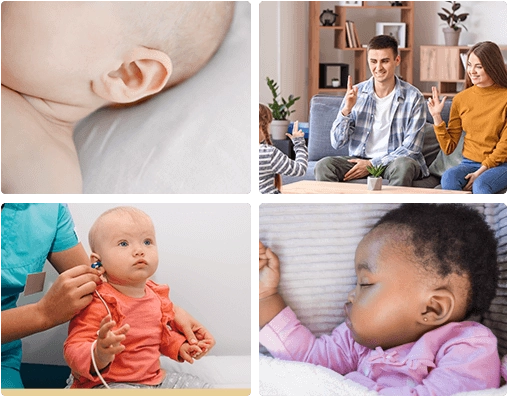
Child Hearing Loss
Deafness and hearing loss in infants and children are relatively common, occurring in approximately 3 of every 1,000 babies.1 Hearing loss can go undetected in infants until the age of two, when important speech and language skills start to develop.
Hearing impairments in children are classified as either congenital (present at birth) or acquired (occurs after birth). If a baby is born with a hearing impairment, it is most likely caused by a gene that is passed down from one or more of the baby's parents. These genetic factors include:
- Autosomal recessive hearing loss: neither parent appears to have hearing loss, but both must carry a recessive gene that is inherited by their child.
- Autosomal dominant hearing loss: a parent must carry a dominant gene for hearing loss that is passed on to their child. The parent carrying this dominant gene may or may not have hearing loss themselves.
- Genetic syndromes: Down syndrome, Treacher Collins syndrome, Crouzon syndrome, Usher syndrome and Waardenburg syndrome.
There are also different non-genetic factors that account for about 25% of congenital hearing loss such as:
- Birth complications (e.g., serious infections, lack of oxygen, blood transfusions)
- Premature birth weight
- Brain or nervous system disorders
- Maternal diabetes
- Maternal drug or alcohol abuse
- Maternal infections during pregnancy (e.g., toxoplasmosis, cytomegalovirus, herpes, measles)
If hearing loss occurs because of an event after birth, this is called acquired hearing loss. Events that can cause acquired hearing loss include:
- Serious head injuries
- A perforated ear drum
- Infections (e.g., measles, mumps, whooping cough)
- Exposure to loud noise
- Untreated ear infections
- Otosclerosis or Meniere's diseases
A selected number of clinical research studies being planned will be recruiting individuals with genetic sensorineural hearing loss.
Hospitals will typically perform a hearing screening for infants within the first few days of birth. However, there are cases when infants will pass the hearing screening, but still exhibit signs of hearing loss immediately or later in life. There are different milestones related to hearing throughout infancy and childhood that your child should meet, including:2
0-4 Month Milestones:
- Startle to loud sounds
- Wake up to loud sounds
- Respond to familiar voices
4-9 Month Milestones:
- Babble
- React toward familiar sounds
- Smile when spoken to
9-15 Month Milestones:
- Repeating simple sounds
- Respond to their name
- Use their voice to get attention
15-24 Month Milestones:
- Name common objects
- Follow simple commands
- Use words
If you’re concerned that your child has difficulty hearing or may be deaf, it is important to seek professional medical attention.
There are many different interventions for the various degrees of hearing loss in infants and children. Audiologists have the technology to perform in-depth exams to determine the type and extent of hearing loss that your child may have. Some options for managing childhood hearing loss include:
- Hearing aids
- Cochlear implants
- Assistive listening (FM systems that work in conjunction with hearing aids and cochlear implants)
- Speech therapy
- American sign language
There are clinical research studies being planned that aim to advance the understanding of, and investigate potential treatments for, hearing loss in children.
Frequently Asked Questions
What is a Clinical Research Study?
A clinical research study involves human volunteers (also called participants) that is intended to add to medical knowledge. There are two types of clinical studies: interventional studies (also called clinical trials) and observational studies.3
Interventional studies (clinical trials) are specifically designed where participants are assigned to groups that receive one or more intervention/treatment (or no intervention) so that researchers can evaluate the effects of the interventions on biomedical or health-related outcomes. The assignments are determined by the study's protocol. Participants may receive diagnostic, therapeutic, or other types of interventions.3 The results may show that the investigational intervention is better than, as good as, or worse than the standard treatment or inactive placebo. Qualified doctors, nurses, and other medical professionals will conduct the study and its assessments.
Observational studies are specifically designed where participants are identified as belonging to a population of interest and are assessed for biomedical or health outcomes. Participants may receive diagnostic, therapeutic, or other types of interventions, but no interventions are required as part of the study. A patient registry is one type of observational study.3
It is only through the completion of clinical research studies that investigational interventions can be evaluated, and if proven safe and effective, approved for general use by appropriate regulatory or health authorities, such as the U.S. Food and Drug Administration (FDA).
What happens to personal information?
The study team respects and protects the participant’s privacy. The study team will not share the participant’s information except as required by law. The study team will store the participant’s personal information with codes that do not identify the participant. The Informed Consent Form has more information about the participant’s privacy.
Who oversees research studies?
To help ensure that our clinical research study is ethical and that participants' rights are protected, Institutional Review Boards (IRB) or Ethics Committees (EC) review and approve study protocols.
Can participation in the study stop at any time?
Yes, your involvement in a study is voluntary. The participant may stop participating at any time. If the participant decides to stop early, please notify the study team. The study team for interventional clinical studies will ask the participant to return to the study center at least once for follow up tests to assess the participant's health once the investigational medication or intervention has been stopped.
Is there compensation for time and travel?
Parents/participants who are eligible and take part in the study may receive some compensation for their time and reimbursement for their travel expenses. Please discuss this with the research site staff when they contact you.
Sign Up
What happens if I Sign Up? A recruitment specialist will try to match you with a clinical research study for children with genetic sensorineural hearing loss or notify you when one becomes available. You may then be contacted directly by a representative from the company sponsoring the research about an opportunity to participate in a clinical research study. The research studies being planned will be recruiting patients with genetic sensorineural hearing loss. Your child may not qualify for a study. Qualification is determined on an individual basis for each study.